
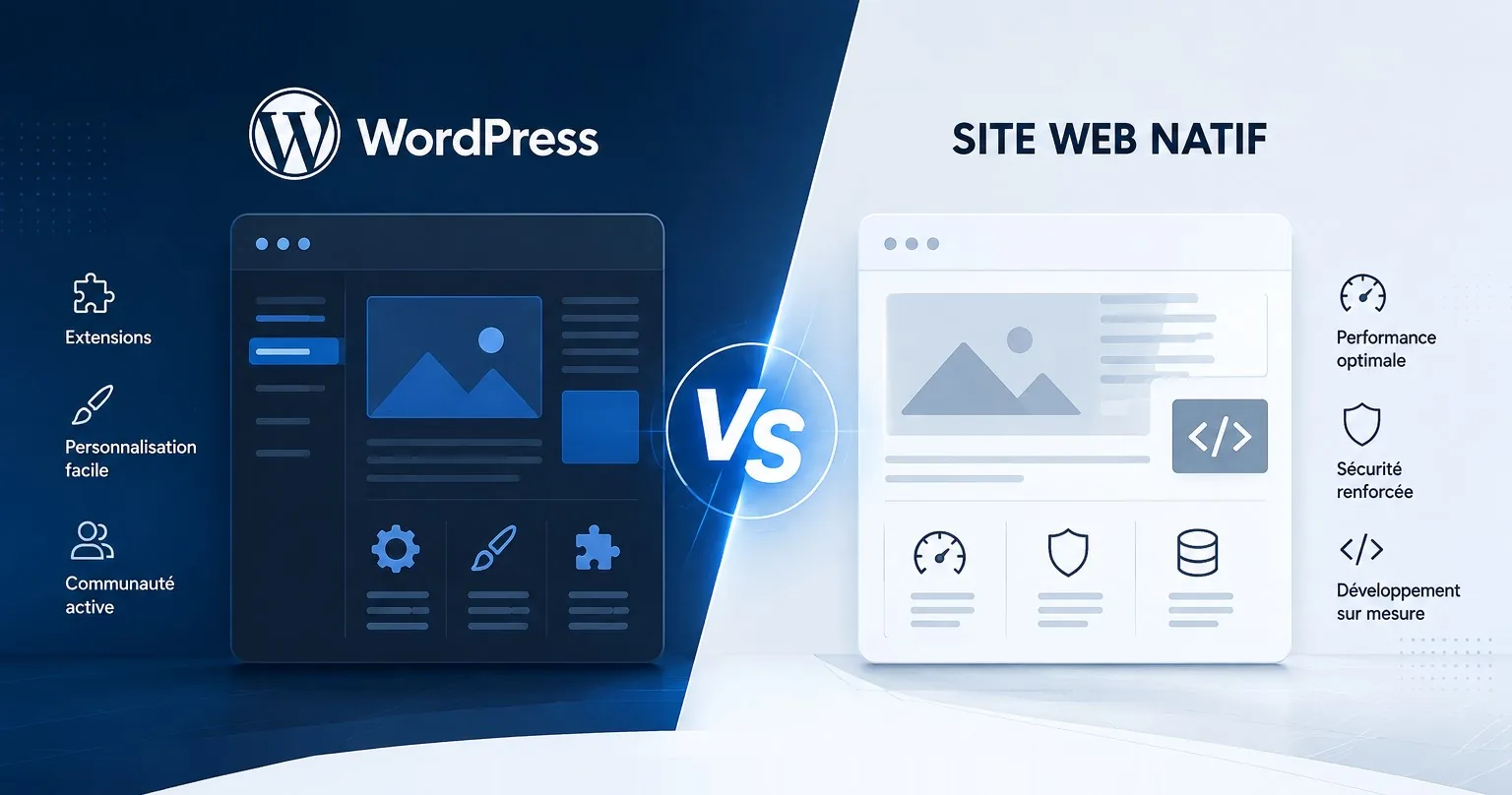
WordPress runs more than four in ten websites worldwide. That dominance breeds a reflex: for any project, reach for WordPress. Sometimes it is the right call; sometimes it is a mistake you pay for two years later, the day a PHP update takes the site down. Here is how to decide clearly.
What WordPress does very well
For a site whose content changes often and must be edited by non-technical staff — a blog, a news outlet, an institutional site with weekly updates — WordPress is hard to beat. The editing interface is familiar, the plugin ecosystem covers almost everything, and an independent writer can publish without touching a line of code.
Where the CMS becomes a trap
Every plugin is third-party code, updated on its own schedule — or abandoned. An average WordPress site stacks twenty or thirty of them. When PHP moves to a major version, a single plugin failing to follow is enough to break the site. It is the story we see most often: a premium theme bought once, never maintained, that eventually renders the site unreachable.
A premium theme is seductive on day one. The trouble comes on day one thousand, when its author is gone and the web has moved on without it.
When custom wins
A hand-coded site — HTML, CSS, JavaScript, and a little back-end when needed — carries no plugin debt. It contains only what it needs. It is faster, because it does not load thirty scripts to render a page. It is safer, because its attack surface is tiny. And it does not break on its own on a Sunday night.
The trade-off: you need a developer to change the structure. But for a brochure site, a landing page, a corporate site whose content rarely moves, that trade-off almost always pays off.
The decision grid
- Choose WordPress if several people publish content weekly and must be self-sufficient.
- Choose custom if the site changes little and must be fast, durable and free of heavy maintenance.
- A hybrid is possible: a static site for stable pages, a small CMS for the one section that moves.
There is no good tool in the absolute, only a good tool for a given need. The real risk is not choosing WordPress or native: it is choosing out of habit, without ever asking the question.
We reply within two business days.